Female Enfranchisement and the Conservative Voting Gap
Bühler & Sabet "Female enfranchisement and the conservative voting gap: Evidence from gender-separated precinct returns" European Journal of Political Economy (2026)

In the immediate aftermath of World War I, the Weimar Republic’s first elections presented a profound political puzzle. Despite being the primary advocates for women’s suffrage and representing the material interests of a generally poorer female electorate, the Social Democratic Party (SPD) struggled to capture the votes of newly enfranchised women.
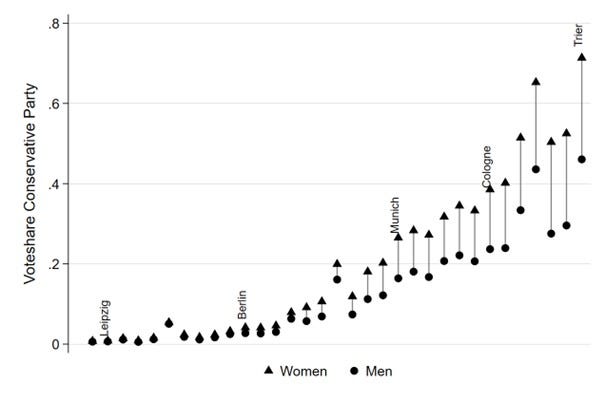
Instead, these voters disproportionately supported the confessional centre, specifically the Catholic Zentrum and the Bavarian People’s Party (BVP).
Research by Mathias Bühler (LMU Munich, Project B08) and Navid Sabet (Goethe University Frankfurt) leverages a unique institutional quirk from Munich’s 1924 election to explain this “conservative voting gap”.
By utilizing ballots counted separately by gender at the precinct level and linking them to digitized pre-suffrage census records from 1910, the authors provide granular evidence of how social identity can override material self-interest. Their analysis reveals that women supported confessional centre parties by a margin ten percentage points higher than men. Crucially, traditional economic indicators fail to explain this divergence.
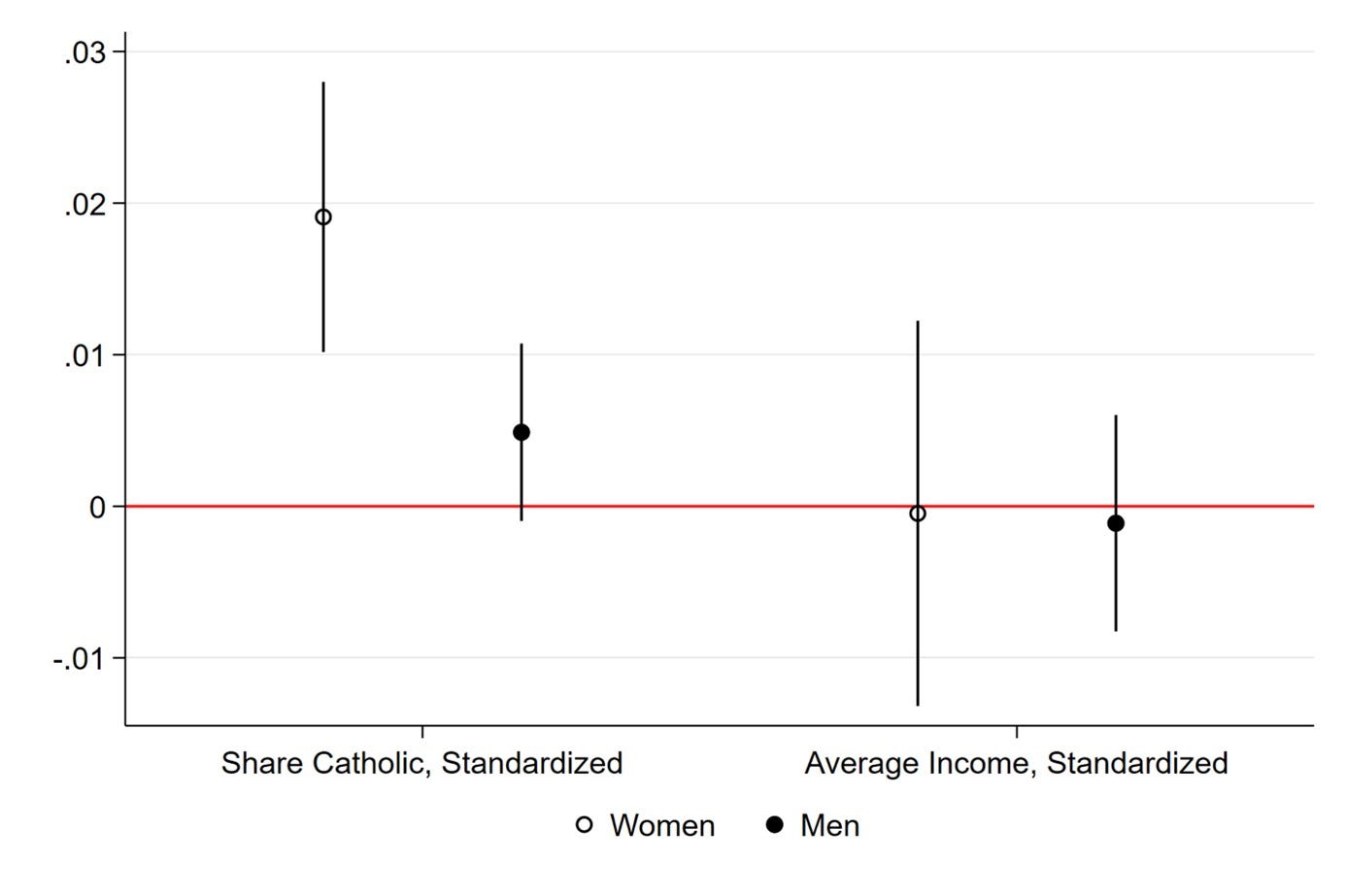
The dominant driver of this voting behaviour was religious identity. The study finds that precincts with higher concentrations of Catholic women relative to men displayed significantly higher female support for the confessional centre. Quantitatively, a one-standard deviation increase in the female Catholic share corresponds to a 4.4 percentage point rise in support for centre parties.
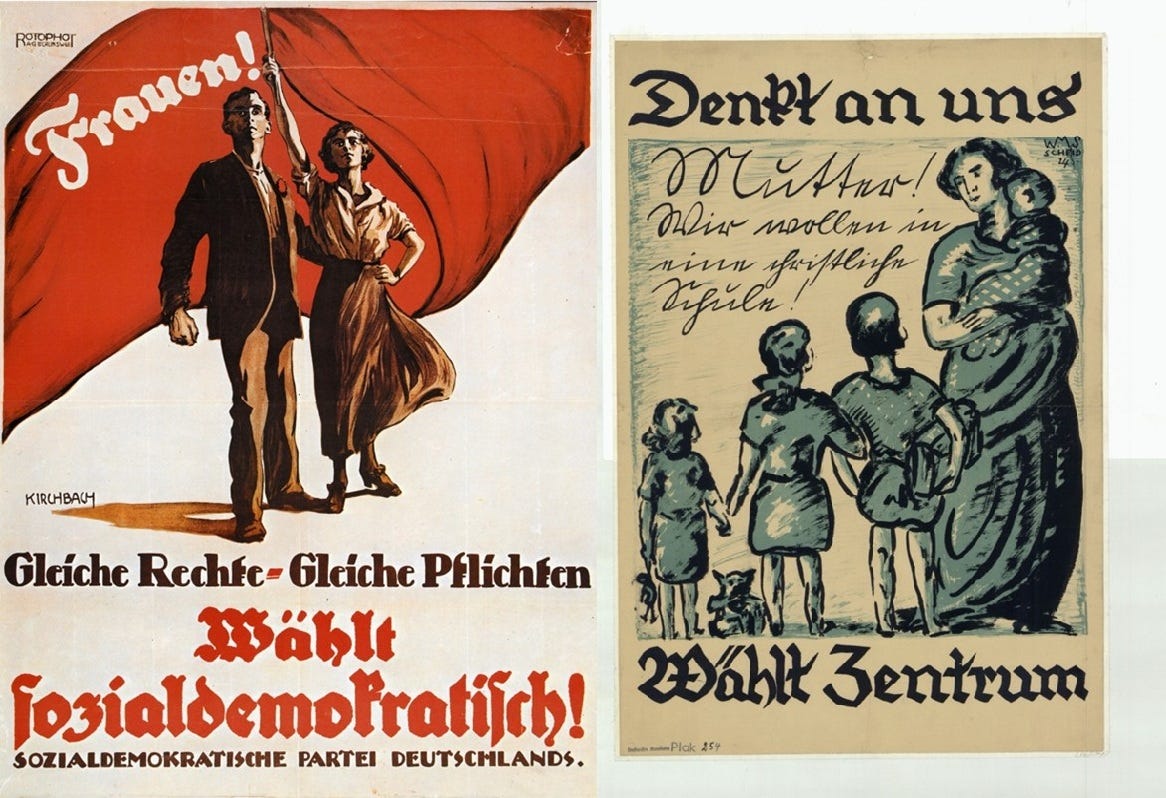
First, these results challenge standard political economy models, such as the Meltzer-Richard framework, which predict that expanding the franchise to lower-income groups should naturally shift the electorate toward redistributive, left-wing policies. Instead, the Munich data suggests an “identity payoff” that systematically outweighed the “redistributive payoff”. For these voters, aligning with the prescribed norms of their religious milieu provided greater utility than the material gains offered by secular parties. This research provides a historical framework for understanding contemporary “identity politics,” suggesting that entrenched cultural identities can decouple political choice from economic incentives even when material stakes are high.
Second, the results present a micro-foundation for a well-observed phenomenon in the Weimar Republic where dominantly catholic regions voted less for nationalist right parties than protestant regions. Catholic women bolstered the centre party’s numbers, dampening support for more extreme nationalist factions, suggesting that religious identity (especially among women) acted as a stabilizer for the constitutional centre.